-
Govind Bhawan,Kolkata - 700001
Govind Bhawan,Kolkata - 700001
Hello Reader!
Welcome to the blog page of Pestonix, one of the best pest control company in Kolkata.
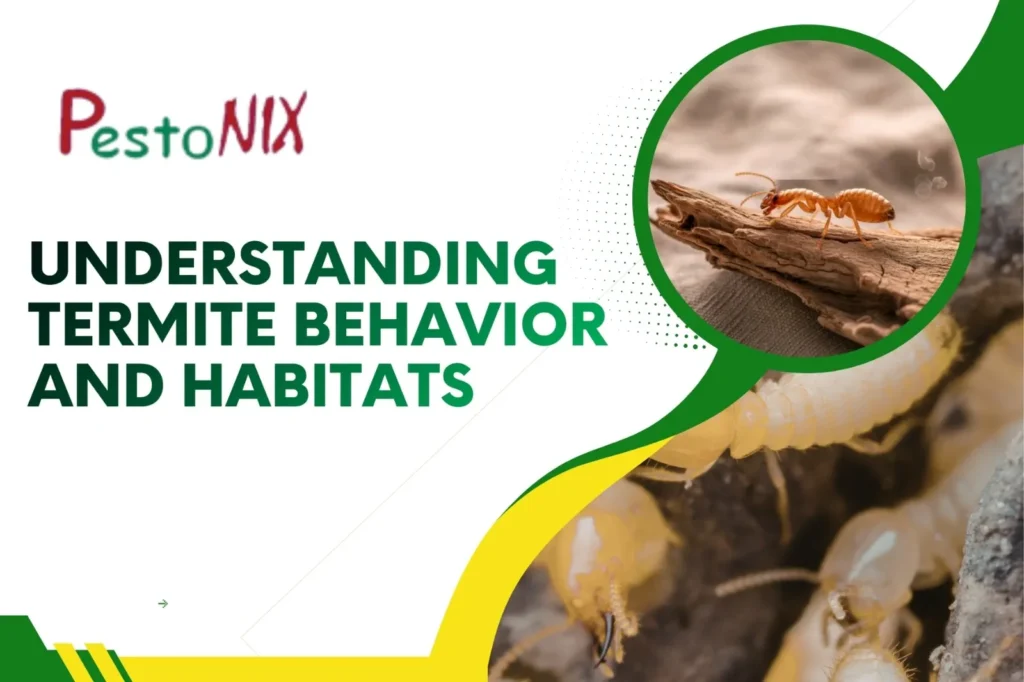
Termites are among the most destructive pests that can silently invade homes, offices, warehouses, and commercial properties without giving obvious warning signs in the early stages. Their tiny size and hidden lifestyle make them difficult to detect, but the damage they cause can be extensive and expensive. To prevent long-term structural destruction, it is essential to understand Termite Behavior and Habitats in detail.
At Best Pest control Company In Kolkata, we believe that awareness is the first step toward effective termite prevention and treatment. If you know how termites live, feed, reproduce, and spread, you can take timely action before they turn into a major problem.
In this detailed guide, we will explore everything you need to know about Termite Behavior and Habitats, including their types, nesting habits, feeding patterns, environmental preferences, and how professional termite control can protect your property.
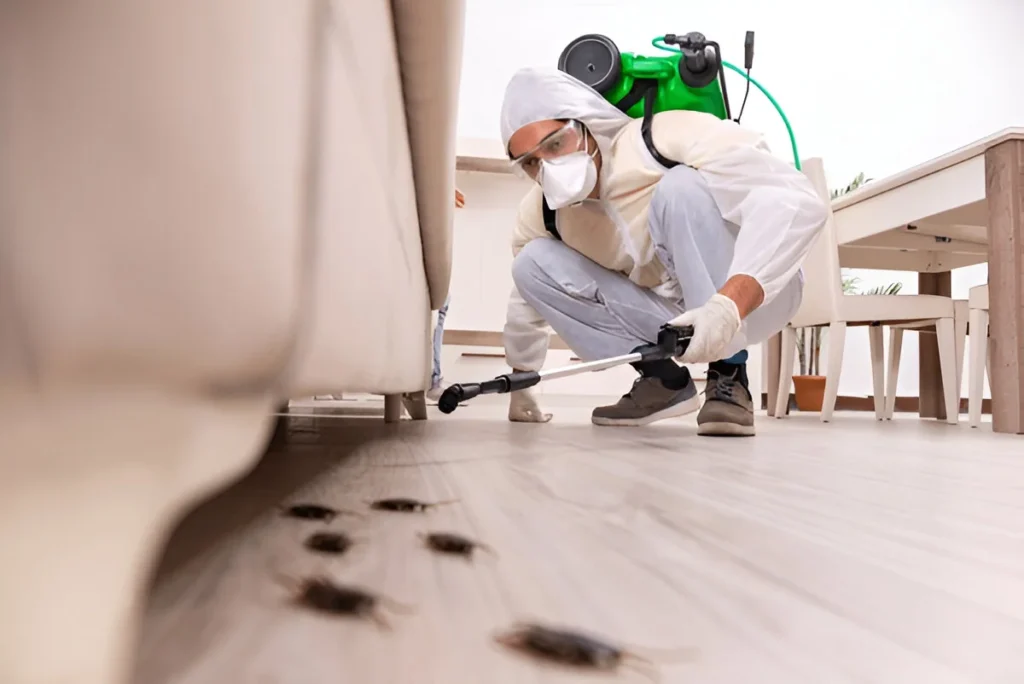
Termites are small, soft-bodied insects that feed primarily on cellulose, a natural component found in wood, paper, cardboard, furniture, books, and even some fabrics. Although they are often mistaken for ants, termites are entirely different in their biology and destructive potential.
They are social insects that live in highly organized colonies and work together to gather food, expand nests, and protect their queen. Their hidden nature makes them one of the most dangerous household pests.
Understanding Termite Behavior and Habitats is essential because termites rarely live alone. Where you see one termite, there is usually an entire colony nearby.

Many property owners only discover termites after visible damage appears—such as hollow wooden furniture, peeling paint, damaged door frames, or weakened walls. By then, the infestation may already be severe.
Learning about Termite Behavior and Habitats helps in:
At Best Pest control Company In Kolkata, we often see that homes with untreated termite infestations suffer damage for months or even years before the owners notice it.
To truly understand Termite Behavior and Habitats, it is important to know the main types of termites commonly found in residential and commercial spaces.
These are among the most destructive termite species. They usually live underground and build mud tubes to travel between their nest and food sources.
These termites are very common in humid environments and are a major concern in cities like Kolkata.
Drywood termites do not need direct contact with soil. They infest dry wood and can live inside furniture, doors, windows, wooden beams, and cabinets.
Understanding Termite Behavior and Habitats of drywood termites is important because they can spread unnoticed inside homes for long periods.
These termites prefer wood with high moisture content and are often found in decaying or water-damaged wooden structures.
Though less common than subterranean termites, they can still cause serious problems if ignored.
One of the most fascinating aspects of Termite Behavior and Habitats is their highly organized colony system. Termites live in colonies with different castes, and each caste has a specific role.
The queen is the heart of the colony. Her primary role is reproduction. In some species, the queen can lay thousands of eggs per day.
A single termite queen can sustain a massive colony for years.
The king remains with the queen after mating and helps maintain the colony’s reproductive cycle.
Worker termites are the most numerous members of the colony. They are responsible for feeding, nest building, grooming, and caring for eggs and young termites.
When discussing Termite Behavior and Habitats, workers are especially important because they are the ones actively damaging structures.
Soldier termites defend the colony from threats such as ants and other predators.
These winged termites are produced when the colony matures. Their job is to leave the colony, mate, and start new colonies elsewhere.
If you notice winged termites around your home, it may indicate a nearby infestation. At Best Pest control Company In Kolkata, we advise immediate inspection if swarmers are seen indoors.
Now let us dive deeper into Termite Behavior and Habitats by understanding how termites behave in their natural and built environments.
Termites avoid sunlight and open exposure. They thrive in dark, hidden, and protected spaces.
Because of this secretive behavior, termite infestations often go unnoticed for long periods.
Termites feed continuously and can remain active 24/7. Unlike many pests that move around visibly, termites eat wood from the inside out.
This feeding pattern is a major part of Termite Behavior and Habitats, and it explains why termite damage is often only discovered after severe internal destruction.
Termites communicate using pheromones and vibrations. These signals help them:
This social coordination makes them extremely efficient pests.
Subterranean termites construct mud tubes to travel safely between the soil and food source. These tubes protect them from dryness, predators, and light.
Mud tubes are one of the most obvious signs professionals from Best Pest control Company In Kolkata look for during termite inspections.
Moisture plays a crucial role in Termite Behavior and Habitats. Termites are highly attracted to damp and humid conditions.
This is one reason why termite infestations are common in humid climates and poorly ventilated spaces.
The second half of Termite Behavior and Habitats focuses on where termites live and why they choose certain environments.
Subterranean termites typically build their colonies underground, where moisture levels remain stable and the colony stays protected.
Even if termites live underground, they can travel into your home through tiny cracks.
Wood is both a food source and a shelter for termites. Any untreated or moisture-exposed wood can become a termite habitat.
At Best Pest control Company In Kolkata, we often find infestations inside wooden furniture that appears perfectly normal from the outside.
Termites are strongly attracted to spaces where humidity remains high.
These hidden areas are ideal breeding and feeding grounds for termites.
Termites can enter homes and offices through very small openings.
Once they gain entry, they establish hidden pathways and begin feeding silently.
Termites can also thrive outdoors before eventually moving indoors.
Understanding Termite Behavior and Habitats outdoors can help prevent indoor infestations.
Knowing the signs can help you detect termites before major damage occurs.
If you notice any of these warning signs, contact Best Pest control Company In Kolkata immediately for a professional inspection.
Also Read: How to Prevent Termites Spreading in Your Home?

Kolkata’s climate can create ideal conditions for termite growth. Warm temperatures, seasonal humidity, moisture exposure, and old wooden structures increase the risk of infestation.
This is why homeowners and businesses should take Termite Behavior and Habitats seriously and invest in preventive pest management.
Understanding Termite Behavior and Habitats is only useful if it leads to action. Here are some practical steps to reduce the risk of infestation:
Fix leaks, improve drainage, and keep areas dry.
Wooden materials in direct contact with soil are more vulnerable to termite attack.
Close off access points around your property.
Keep firewood, cardboard, and wooden waste away from the main building.
This is one of the most effective ways to catch termite activity early.
At Best Pest control Company In Kolkata, our trained professionals inspect hidden termite-prone zones and recommend customized treatment plans.
Many people try sprays, powders, or home remedies to get rid of termites. Unfortunately, DIY methods usually only kill visible termites while leaving the hidden colony untouched.
Because termites work silently and systematically, expert intervention is usually necessary.

A professional termite control service does more than kill termites—it identifies the source, eliminates the colony, and helps prevent future infestations.
At Best Pest control Company In Kolkata, professional termite management may include:
A thorough inspection of all termite-prone areas.
Understanding which termite type is present helps determine the best treatment approach.
Depending on the infestation, treatment may involve:
Follow-up services and preventive recommendations help keep your property termite-free.
This is where knowledge of Termite Behavior and Habitats becomes extremely useful in designing an effective control plan.
When it comes to termite infestations, professional expertise matters. Termites are not just nuisance pests—they are structural destroyers that can compromise the safety and value of your property.
At Best Pest control Company In Kolkata, we understand local termite problems and provide solutions designed specifically for Kolkata’s climate and building conditions.

Termites are attracted to wood, moisture, and dark hidden spaces, which make homes ideal places for nesting and feeding.
They often live underground, inside wooden structures, in damp walls, or within furniture and hidden cracks.
Common signs include hollow wood, mud tubes, discarded wings, peeling paint, and swollen doors or windows.
Yes, due to humidity, moisture, and weather conditions, termite infestations are quite common in Kolkata.
Because Best Pest control Company In Kolkata provides expert inspection, targeted termite treatment, and long-term protection for your property.
Understanding Termite Behavior and Habitats is essential for every homeowner, office owner, landlord, and property manager. Termites are silent invaders that can cause severe and expensive damage if left untreated. Their preference for darkness, moisture, wood, and hidden spaces makes them especially dangerous.
By learning how termites live, move, feed, and reproduce, you can take proactive steps to protect your property. Whether it is identifying early warning signs, reducing moisture, or scheduling regular inspections, prevention is always better than cure.
If you suspect termite activity in your home or workplace, do not wait for the damage to become visible. Get expert help from Pestonix, Best Pest control Company In Kolkata and protect your property with trusted, professional termite control solutions.
01.04.2026